October 17, 2026
Upper vs Lower Blepharoplasty: Which Eyelid Surgery Do You Need?
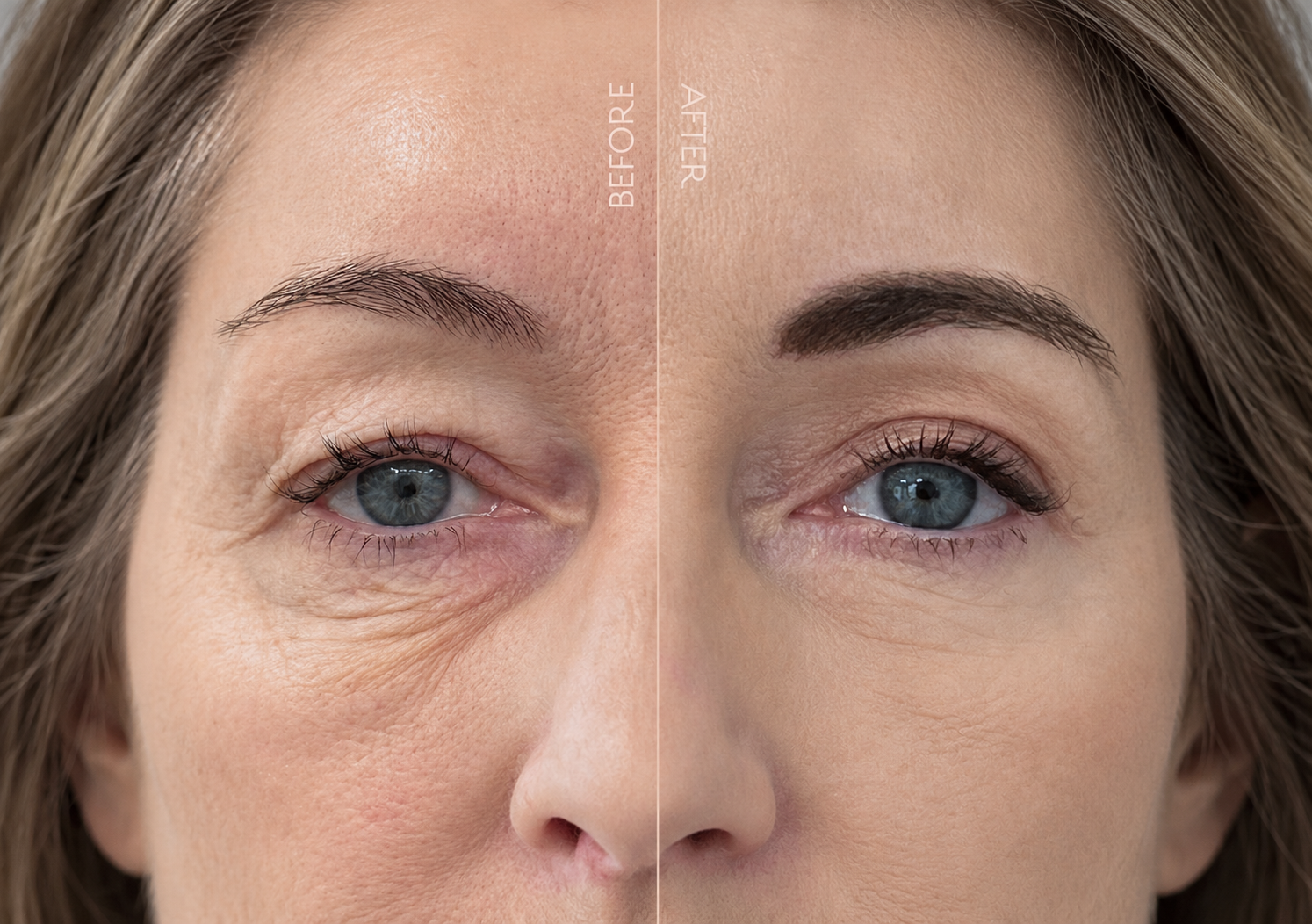
Eyelid surgery is not one operation. Upper and lower blepharoplasty treat different parts of the eye area, for different reasons, and the right choice depends on what you see in the mirror and why it is happening.
In short: upper blepharoplasty treats heavy, hooded upper eyelids caused by excess skin. Lower blepharoplasty treats under-eye bags, loose skin and the contour between the eyelid and cheek. Many people need only one, some need both, and a few are better served by treating the brow first.
Dr Maryam Zamani is an oculoplastic surgeon and facial aesthetics doctor, and eyelid surgery is her primary clinical specialty. This guide explains how she decides between the two at her Chelsea clinic.
What is the difference between upper and lower blepharoplasty?
| Upper blepharoplasty | Lower blepharoplasty | |
|---|---|---|
| Area treated | The upper eyelid, between the brow and the lashes | The lower eyelid and the area beneath the eye |
| Typical concerns | Hooding, excess skin, a heavy or tired look, make-up that smudges into a fold | Bags, puffiness, loose or crepey skin, the groove between eyelid and cheek |
| Where the scar sits | Hidden in the natural crease of the upper eyelid | Just below the lower lashes, or inside the lower lid, depending on the technique |
| Operating time | Usually 30 to 60 minutes | Usually around an hour |
| Can it improve vision? | Yes, when excess skin blocks the upper field of sight | Mainly cosmetic |
| Back to office work | Usually within 7 to 10 days | Often a little longer than for the upper lids |
You can read about each on its own page: upper eyelid blepharoplasty and lower eyelid blepharoplasty.
Which concerns point to upper blepharoplasty?
- A fold of skin that overhangs the eyelid crease or rests on the lashes
- Upper eyelids that look heavy, tired or smaller than they used to
- Difficulty applying eye make-up, or make-up that transfers into the fold
- A feeling of heaviness, or a reduced upper field of vision
Which concerns point to lower blepharoplasty?
- Soft bulges or puffiness on the lower lids that do not change with sleep or skincare
- Loose or crepey lower lid skin
- A visible step or groove between the lower lid and the cheek
- Bags that make you look tired when you are not
How do I know which one I need?
Ask yourself three questions.
- Where do I see it? Above the eye points to the upper lid. Below the eye points to the lower lid. If both bother you, you may need both.
- Is my brow in a good position? If your brow sits low, the upper lid may look heavy because of the brow, not the lid.
- Is it skin, fat or a hollow? Loose skin, a bulge and a groove can look similar in a photograph but are treated differently.
It helps to bring a photograph of yourself from ten years ago to your consultation. It shows how your eyes have changed, which is more useful than how they look today.
Do I need upper and lower blepharoplasty together?
Many patients have concerns above and below the eye, and treating both in one operation means one recovery. Combined blepharoplasty is common for this reason. Others have clear lower lid bags and little upper lid excess, or the reverse, and need only one procedure. The decision rests on your anatomy, not on a standard package.
Why the brow is assessed first
Upper blepharoplasty removes excess eyelid skin. It cannot lift a brow that has dropped. When the brow is the main problem, operating on the eyelid alone can leave the eye looking heavy, and the better plan may include brow ptosis repair or internal brow pexy. Dr Zamani's guide to the best treatment for hooded eyelids explains how to tell the difference.
What about skin quality?
Blepharoplasty removes or repositions tissue. It does not treat the fine, crepey texture of thinned eyelid skin. For that, Dr Zamani often combines surgery with CO2 laser in one procedure, known as blepharoplasty with laser eyelid resurfacing. Her guide to crepey skin around the eyes explains the non-surgical options.
If your concern under the eye is a hollow rather than a bag, read her guide to the best treatment for under-eye hollows first, as filler or fat transfer may be a better fit than surgery.
How should I look after my eye area around surgery?
Good skincare cannot replace surgery, but it helps protect the result. MZ SKIN is Dr Zamani's own skincare range, and the products below are named so you can see how a routine fits together, not because they are the only options.
Before surgery. Protect the skin from sun damage with a daily broad-spectrum SPF such as the Expert UV Protector SPF50, and keep the area well hydrated. Stop retinoids and other active products around the eyes in the days before surgery, as advised at your pre-operative appointment.
In the first weeks after surgery. Follow your aftercare instructions and do not apply any products to the incisions until they have healed and your surgeon has confirmed it is safe.
Once healed. Daily SPF remains the most important step, because healing skin marks easily in the sun. A peptide eye product such as the Microtox Tightening Eye Serum in the morning and the Intensive Bio-Placenta Eye Cream at night support skin quality around the new eyelid contour over the longer term.
What happens at an eyelid surgery consultation?
A good consultation looks at far more than the skin. Expect your surgeon to assess:
- Your upper eyelids, lower eyelids and the position of your brows
- The position and support of the eyelid edge
- The surface of the eye, including any dry eye symptoms
- Your vision, if you feel your upper lids are in the way
- Your general health, medication and expectations
You should leave knowing what is recommended, what is not, and why. Dr Zamani's pre-procedure guide and post-procedure guide explain what to expect before and after.
What are the risks?
Blepharoplasty is a routine procedure in specialist hands. Risks include bruising, infection, bleeding, asymmetry, scarring and temporary dry eye symptoms. More serious problems, such as difficulty closing the eyes or changes in vision, are very rare. A full discussion of risks is part of every consultation.
Is there a non-surgical alternative?
For mild concerns, yes. Brow support, skin tightening and filler can soften early hooding and hollows, but they cannot remove excess skin or a fat bulge. Significant upper lid excess or lower lid bags are best corrected surgically. The complete guide to blepharoplasty covers the procedure in full, and the guide to the ideal age for blepharoplasty covers timing.
Book a consultation with Dr Maryam Zamani
If you are considering eyelid surgery in London, the first step is a proper assessment of your eyelids, brow and skin. Book a consultation at Dr Maryam Zamani's Chelsea clinic and she will explain which procedure, if any, is right for you. You can also explore the MZ SKIN range, read more about Dr Zamani, see her feature in Tatler's guide to the UK's best eyelid surgeons and view current pricing.
Testimonials
Trustindex rating score: 4.7 of 5, based on 222 reviews
JT

My recent experience with the lovely Dr Maryam Zamani and her fabulous team was outstanding. Dr Maryam gave very professional and proactive...
EC
Maryam is highly skilled when it comes to injecting Botox and filler in the right places, and in the right amount. With other practitioners and doctors I have...
JB
The only one I trust for my skin since 10 years. She is truly amazing and an example for women . Very very happy about my laser treatment and her team is...
MCL
After taking my time researching plastic surgeons I decided to go to Dr. Zamani. I watched her IG often, saw what type of treatments she...
SS
I have been a patient of Dr Zamani’s for years, and to put it lightly, I will never let anyone touch my face if it isn’t her! Not only is Dr Zamani a wonderful person, her....
NC
I visited Doctor Zamani with very droopy upper eyelids and I had been thinking about surgery for sometime. I was given Doctor Zamani’s name by a friend who is in...
Frequently asked questions
What is the difference between upper and lower blepharoplasty?
Upper blepharoplasty removes excess skin from the upper eyelid to treat hooding and heaviness. Lower blepharoplasty treats under-eye bags, loose skin and the contour beneath the eye. They address different problems and are chosen according to what is bothering you.
Can I have upper and lower blepharoplasty at the same time?
Yes. Combined blepharoplasty is common and means one operation and one recovery. Whether you need both depends on your anatomy, which is assessed at consultation.
Can I have upper and lower blepharoplasty at the same time?
No. Upper blepharoplasty only treats the upper eyelid. Under-eye bags are treated with lower blepharoplasty, or in some cases with non-surgical options if the bag is mild.
Which has the longer recovery, upper or lower?
Lower blepharoplasty usually takes a little longer to settle than upper. Most people return to office-based work within about a week to ten days after upper surgery, with swelling continuing to settle over several weeks.
How long do blepharoplasty results last?
Results are long-lasting. Ageing continues, but many people enjoy upper eyelid results for a decade or more and do not need further surgery.
Is eyelid surgery available on the NHS?
Eyelid surgery is generally considered cosmetic, and NHS funding is limited and varies by area. Funding for functional upper eyelid surgery depends on local criteria. Your GP can advise on what applies where you live.
Frequently asked questions
What is the difference between upper and lower blepharoplasty?
Upper blepharoplasty removes excess skin from the upper eyelid to treat hooding and heaviness. Lower blepharoplasty treats under-eye bags, loose skin and the contour beneath the eye. They address different problems and are chosen according to what is bothering you.
Can I have upper and lower blepharoplasty at the same time?
Yes. Combined blepharoplasty is common and means one operation and one recovery. Whether you need both depends on your anatomy, which is assessed at consultation.
Does upper blepharoplasty get rid of under-eye bags?
No. Upper blepharoplasty only treats the upper eyelid. Under-eye bags are treated with lower blepharoplasty, or in some cases with non-surgical options if the bag is mild.
Which has the longer recovery, upper or lower?
Lower blepharoplasty usually takes a little longer to settle than upper. Most people return to office-based work within about a week to ten days after upper surgery, with swelling continuing to settle over several weeks.
How long do blepharoplasty results last?
Results are long-lasting. Ageing continues, but many people enjoy upper eyelid results for a decade or more and do not need further surgery.
Is eyelid surgery available on the NHS?
Eyelid surgery is generally considered cosmetic, and NHS funding is limited and varies by area. Funding for functional upper eyelid surgery depends on local criteria. Your GP can advise on what applies where you live.
Will eyelid surgery change how I look?
The aim is a refreshed, natural look, not a different face. Dr Zamani is known for a subtle, precise approach that keeps your features in harmony.
Book Consultation
As a leading Oculoplastic Surgeon with special interest in Facial Aesthetics, Dr. Maryam Zamani has garnered a global reputation - both in the US and UK - for her meticulous attention to detail and sought-after techniques for eyes and facial aesthetics.
Thank you! Your submission has been received!
Oops! Something went wrong while submitting the form.
Find The Clinic by Dr Maryam Zamani in the heart of Chelsea
Book an eyelid surgery consultationLocated on the Kings Road, our clinic is easy to reach from Chelsea, Kensington, Belgravia, Knightsbridge, South Kensington, Fulham and Battersea. We are positioned just moments from Sloane Square with excellent transport links across Central and South West London.
Public Transport
- Nearest tube: Sloane Square (District & Circle lines)
- Approx. 5-minute walk
- Multiple bus routes along King’s Road
Parking
- Metered on-street parking available on surrounding roads
- Nearby car parks: Duke of York Square & Cadogan Place
- Please allow additional time during peak hours
Accessibility: Please let us know if you require any assistance prior to your appointment, our team will be happy to help ensure your visit is comfortable.